Intensive training “Leadership in Medical Education”: three days working with medical students
Поділитися
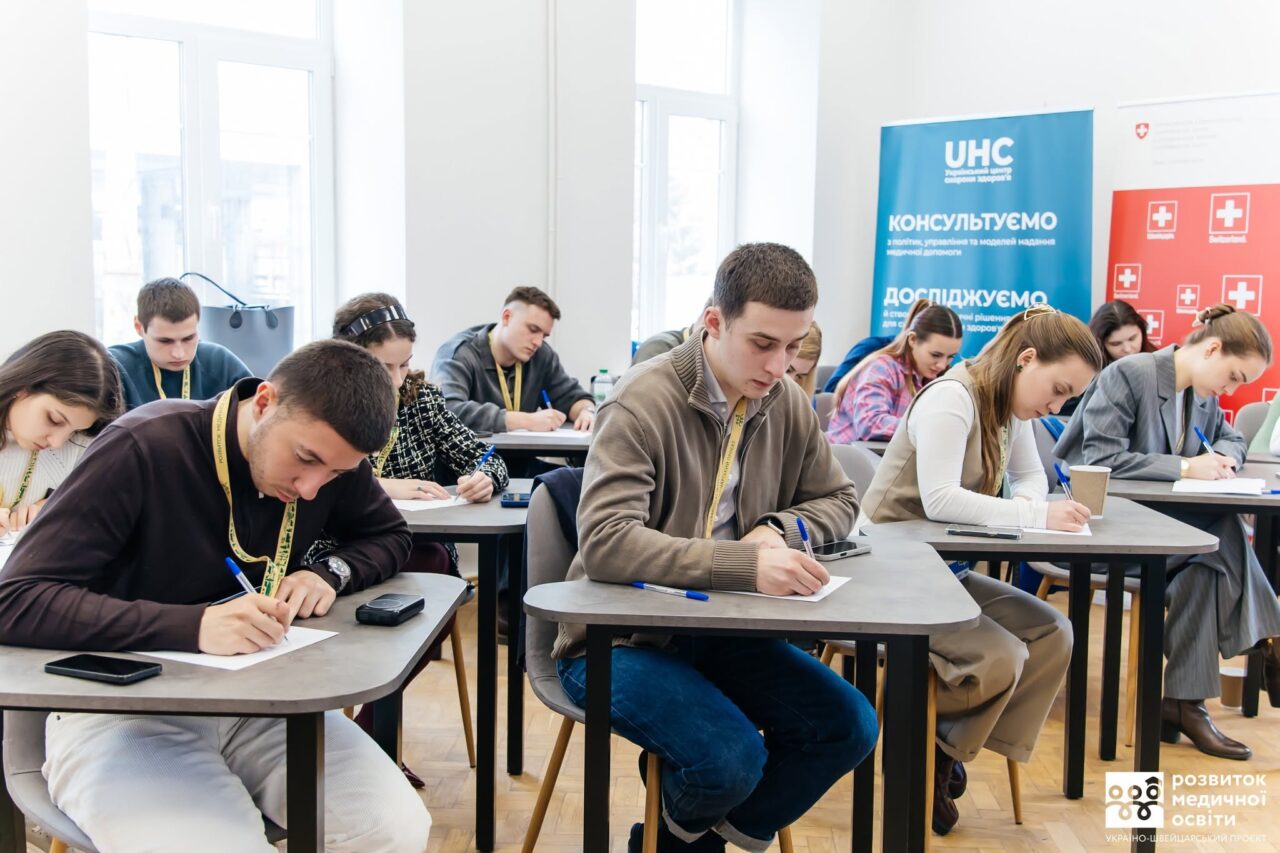
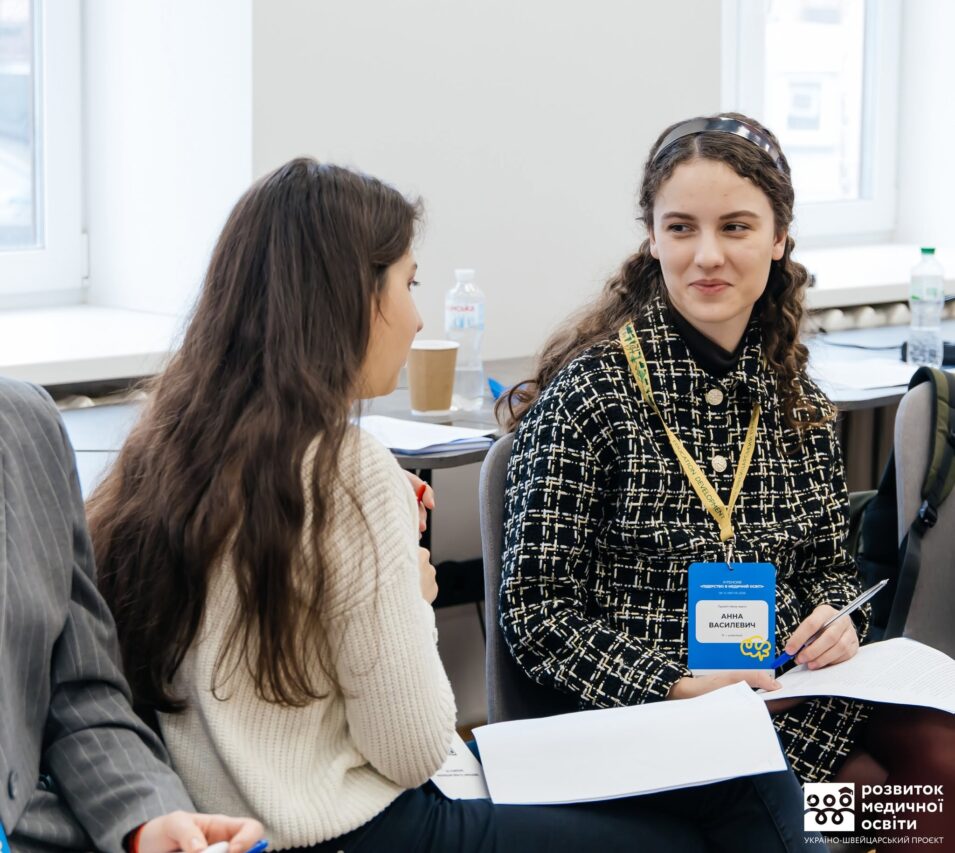
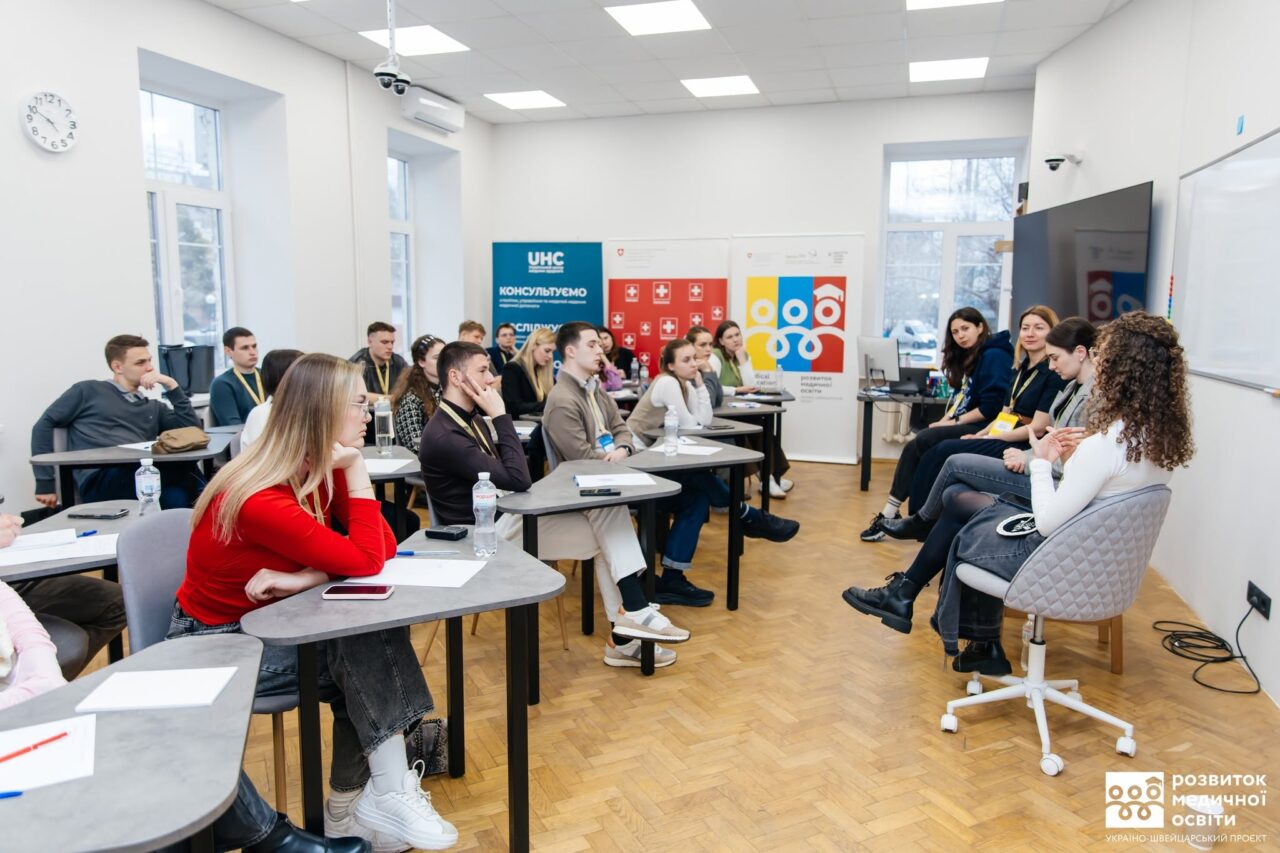
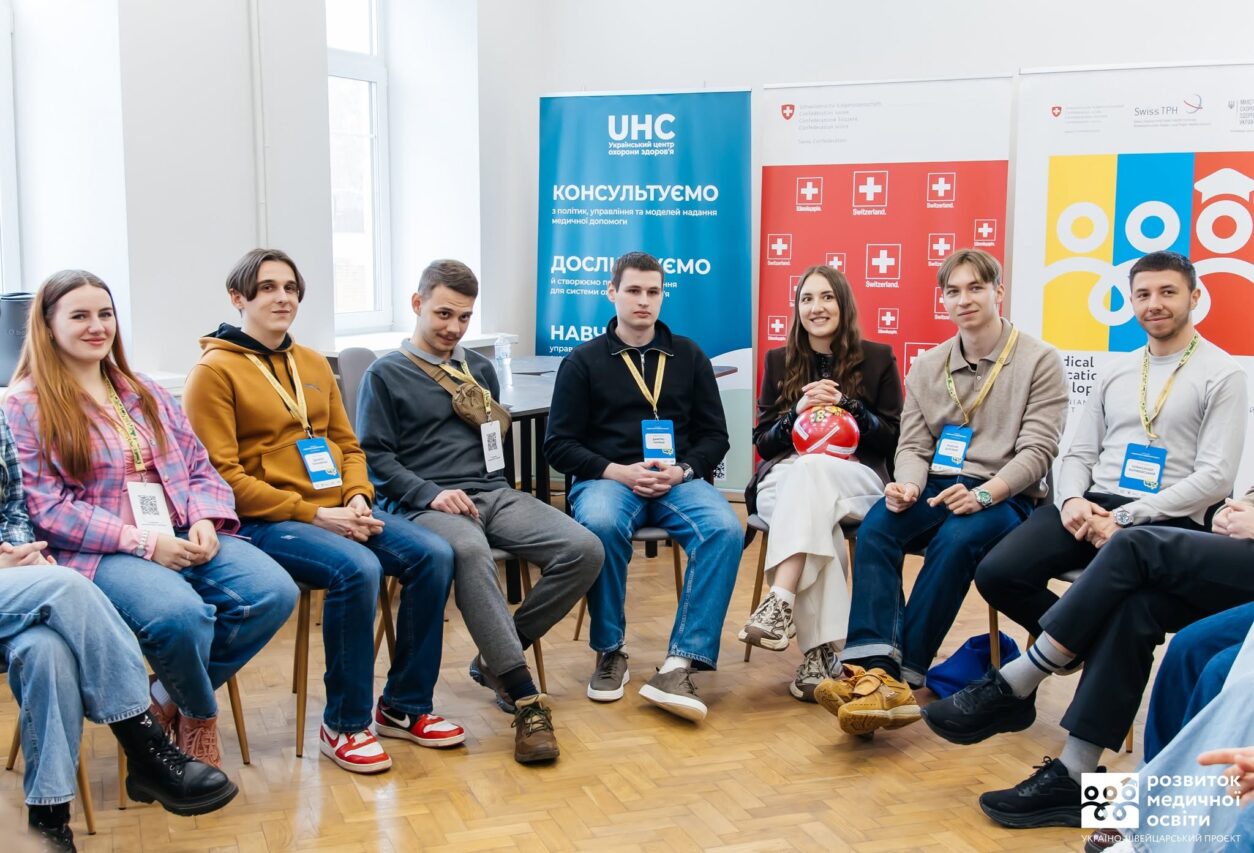
From 8 to 10 April, together with the Ukrainian Healthcare Centre (UHC), we ran the intensive course “Leadership in Medical Education” for 4-6th-year medical students. It is important for us to support the formats that do not only impart knowledge but also teach students to think: to ask questions, analyse, and see the bigger picture. This was the very foundation of the three-day programme.
The intensive course programme was structured around several major topics. The co-founders of the Ukrainian Health Centre (UHC) led three discussions: Matviiy Khrenov on the fundamentals of leadership, Pavlo Kovtoniuk on a systems approach and thinking on the scale of change, and Nataliia Ryabtseva on critical thinking as a skill.
Mychailo Wynnycky, a lecturer and Head of the Centre for Liberal Arts & Sciences at NaUKMA, shared his thoughts on the role of higher education today and how it influences the development of individuals and institutions.
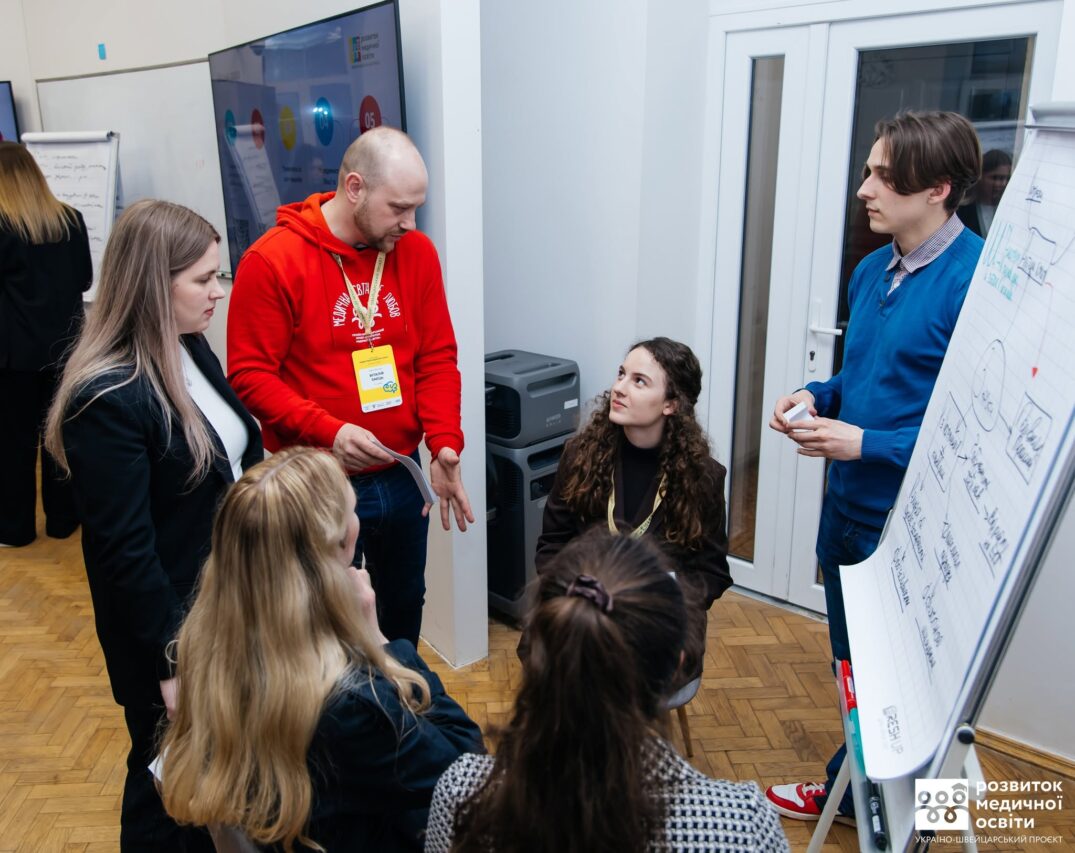
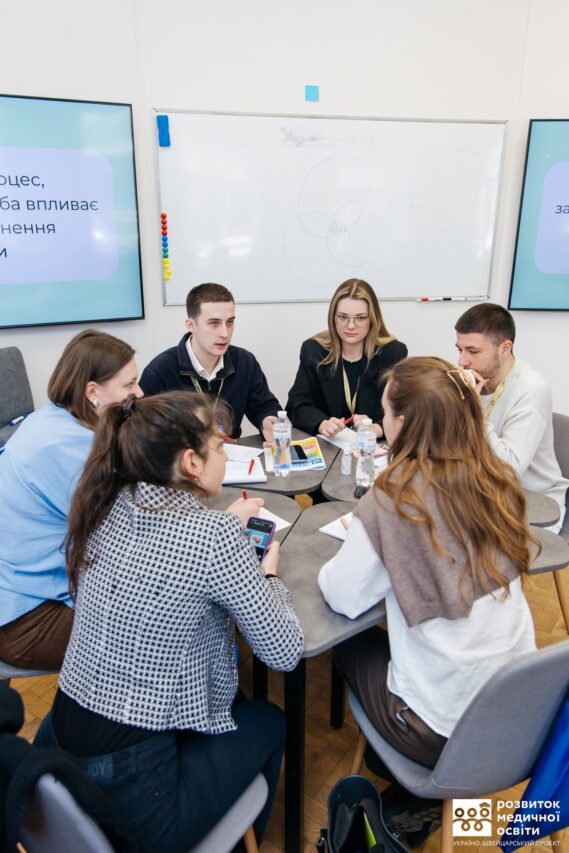
A separate session was dedicated to the ethical use of artificial intelligence, conducted in a world café format by Vitalii Zaiets, the Project’s Digitalisation Coordinator. The students worked on creating a guide to the ethical use of AI, examining the issues from various perspectives ranging from that of an innovative student to that of a regulator and a patient.
The key conclusions from the participants are:
- The doctor’s agency: in clinical situations AI cannot have the ‘final say’; ultimate responsibility always lies with the professional;
- Honesty as the norm: use of AI is not a breach of ethics if it is transparent;
- Safety above all: working with real patient data in open AI systems is unacceptable without strict anonymisation;
- Critical distance: AI may be biased due to the limitations of training datasets, so every response must be checked for relevance to the Ukrainian context.
These findings will lay the foundations for a future guide on the ethical use of artificial intelligence. We’ll be telling you more about it soon. Don’t miss it.
Apart from learning, there was also time for informal socialising: a walk through Podil with Pavlo Kovtoniuk and networking with alumni and students of the Master’s Programme in Healthcare Management.
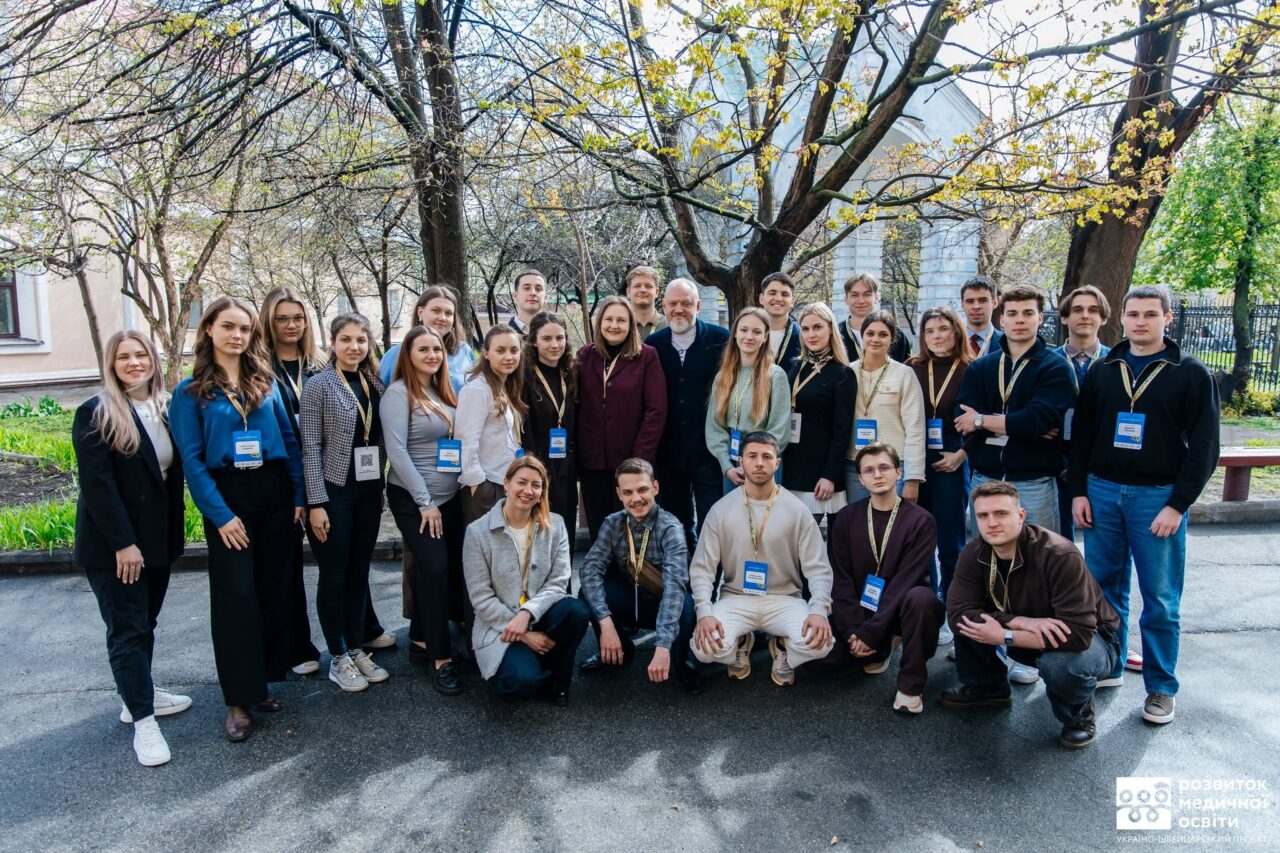
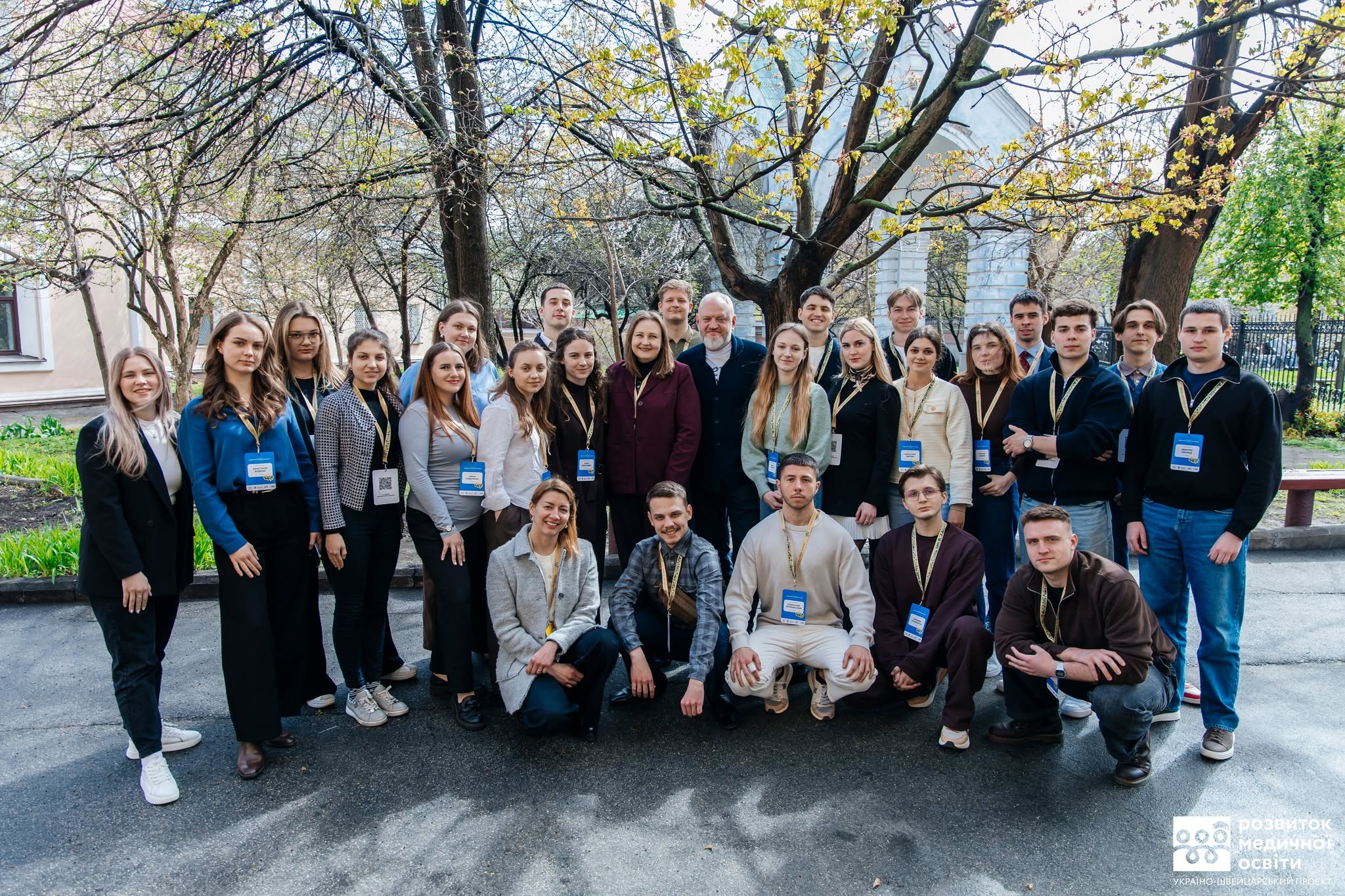
We would like to thank the participants for their enthusiasm and openness, the speakers for the depth of their insights and their willingness to engage with the student audience, and our partners for joint implementation of the event.