11 training sessions on the fundamentals of simulation-based learning for pilot HEIs
Поділитися
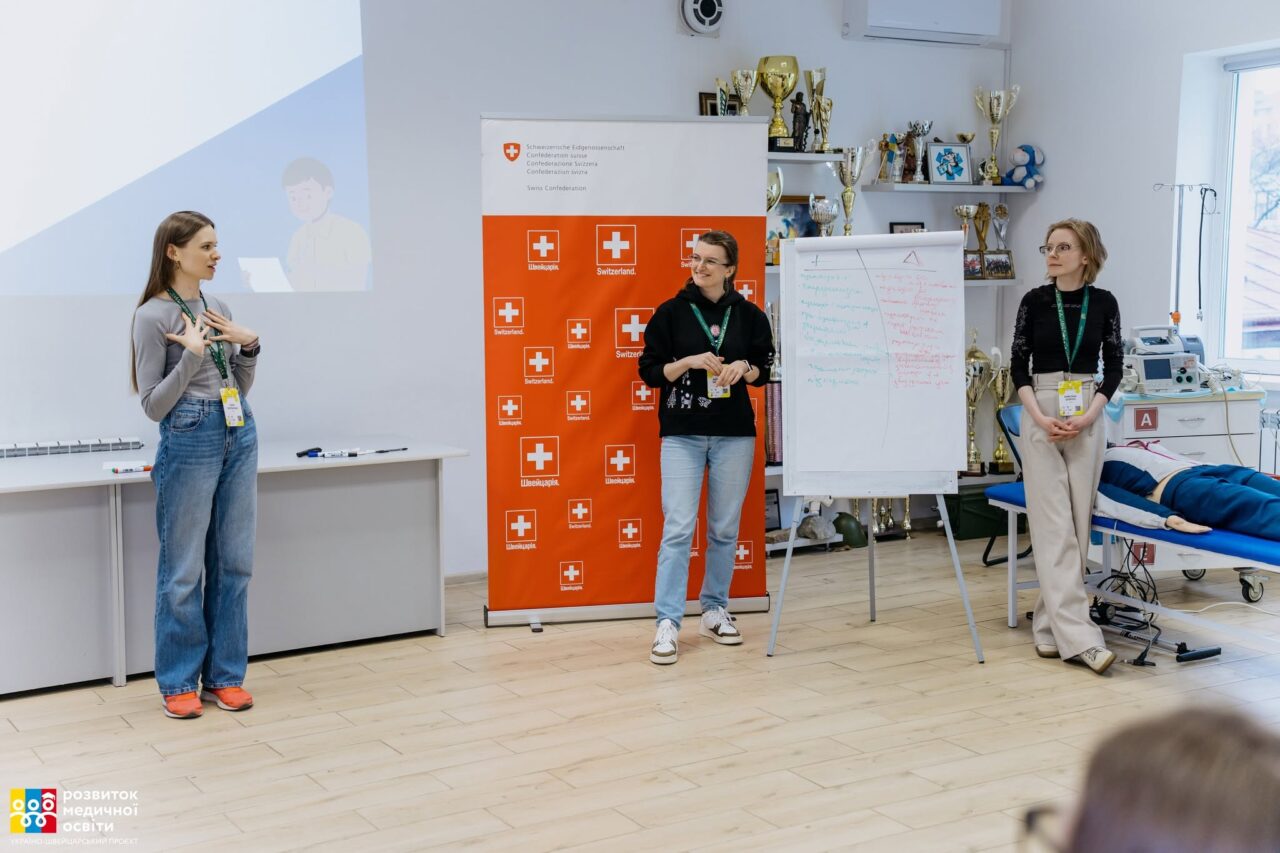
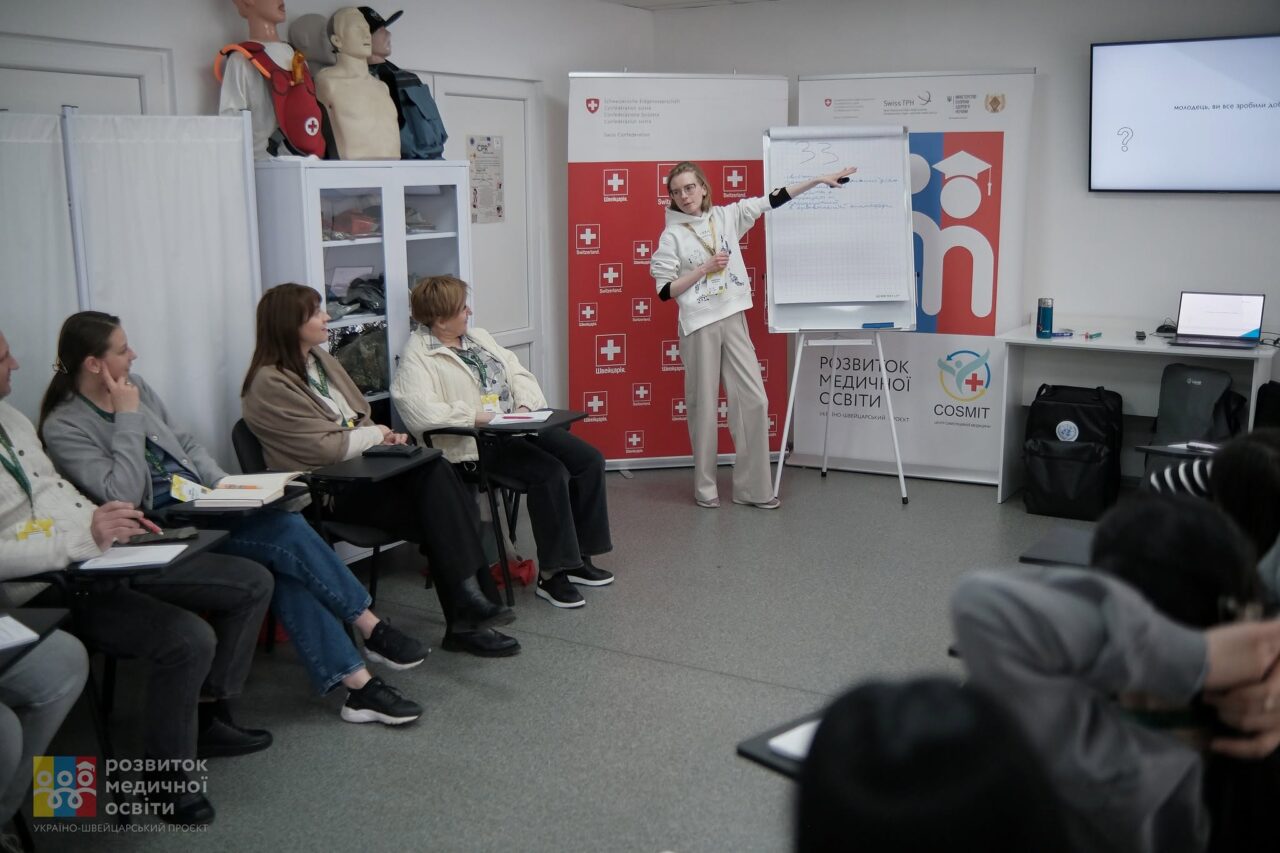
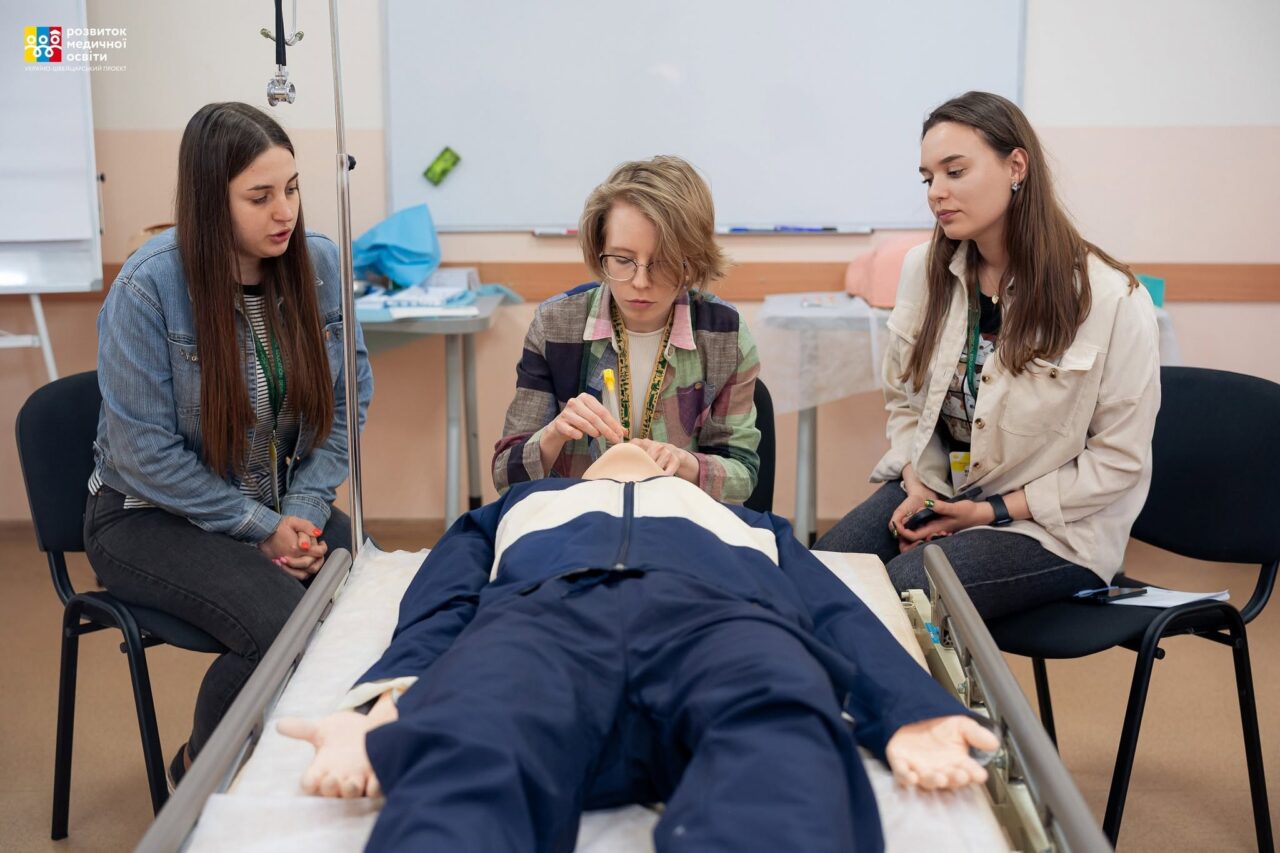
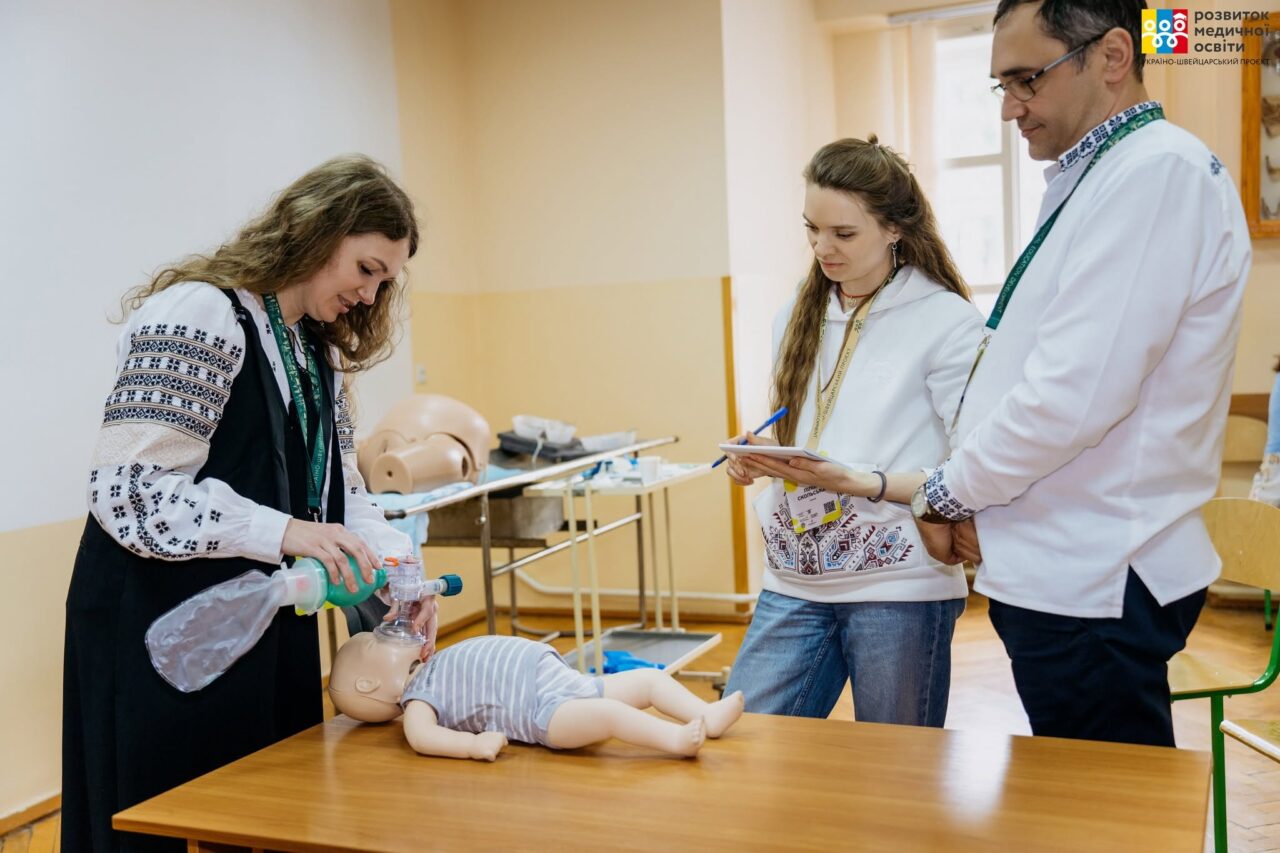
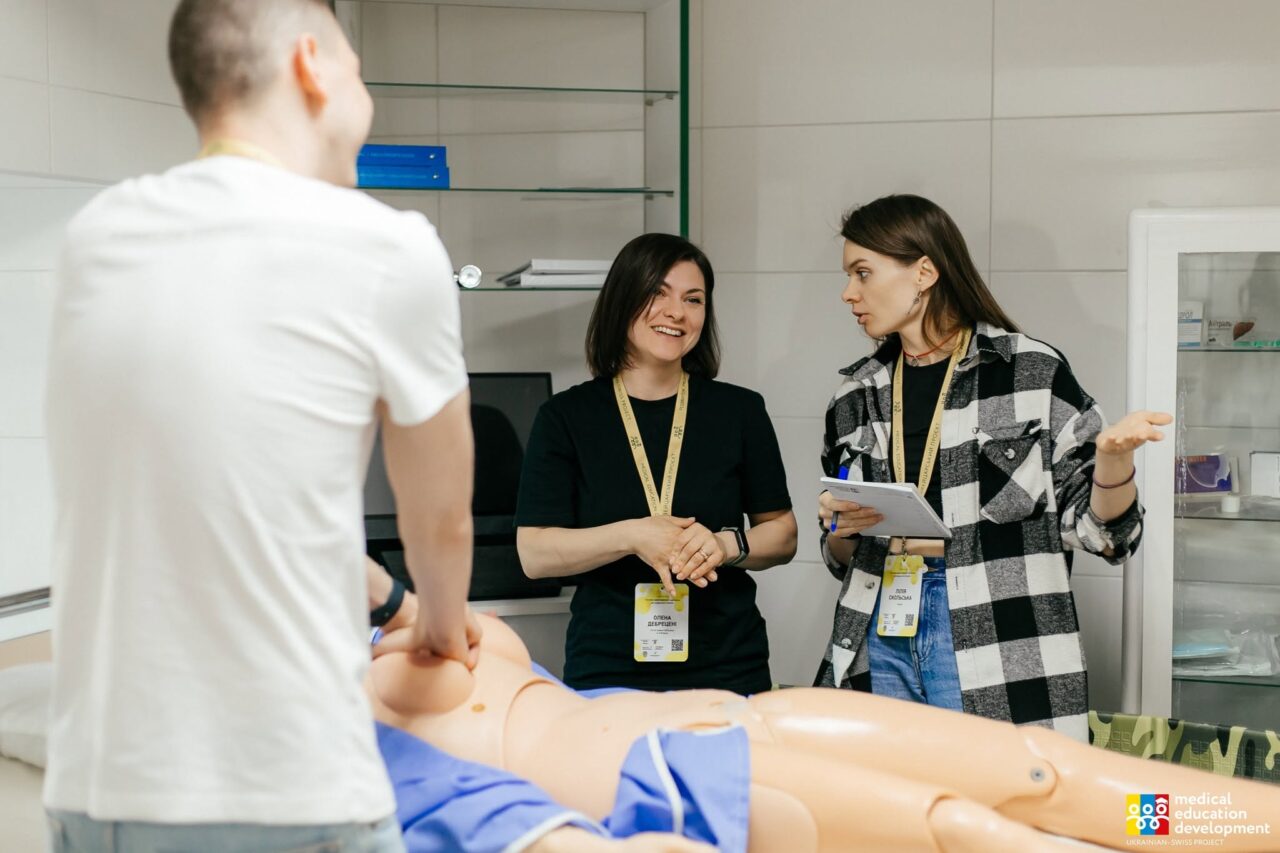
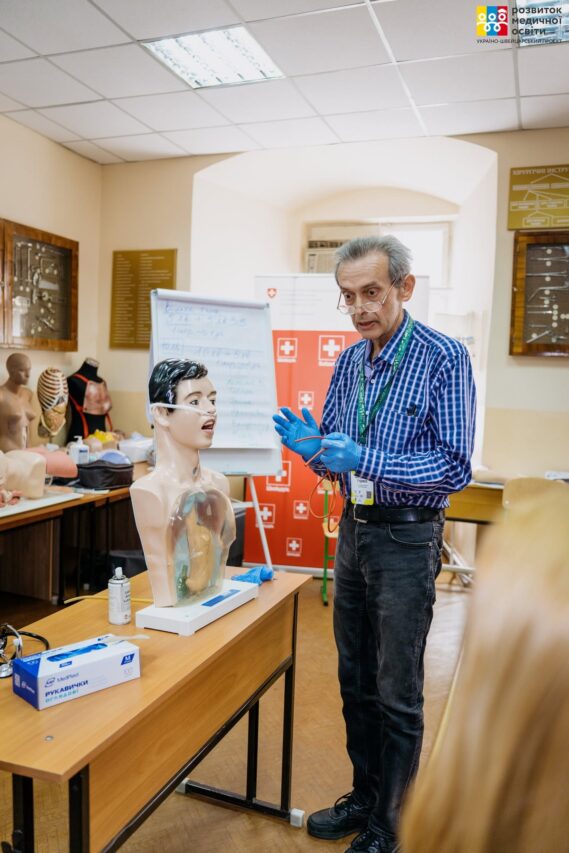
From January to May 2026, teams of educators from clinical departments at ten pilot higher medical education institutions attended 11 training sessions on the fundamentals of simulation-based learning. These events became part of the Swiss-Ukrainian project «Medical Education Development»’s systematic approach to integrating simulation-based methods into the educational process of partner institutions.
Simulation-based learning was introduced in Ukrainian medical HEIs in response to a problem voiced by both teachers and students: a lack of opportunities to practice clinical skills during institutional studies. Previously, the typical approach was to immerse students directly into practice through real patient interaction. Such an approach does not provide a safe learning environment, as a mistake made under those conditions carries a real cost. Meanwhile, students in the early stages of education have not yet mastered skills at a sufficient level to practice safely.
The simulation centre provides a different space: to practice a skill, make a mistake in a safe environment without the fear of causing harm, analyze it, and try again.
Today, simulation-based learning is integrated not only into the learning process but also into assessment: HEIs must be confident that a student not only knows (which is assessed via oral exams and testing) but also can do. This is precisely why medical students take the OSCE (Objective Structured Clinical Examination). Preparing for it is only possible through practice, and the simulation centre plays a key role here.
In response to these challenges, our project embedded a logic into our work with pilot institutions that involves developing simulation-based learning directly across several levels: infrastructure and equipment, institutional strategy and sustainability of the centre, integration into educational programs in the form of simulation sessions within the «General Practice–Family Medicine» course (the simulation scenarios section in the guide for medical educators «General Practice–Family Medicine»), and finally, the capacity of teachers to effectively use the simulation centre in the teaching process.
It is this fourth level that became the focus of our series of training sessions.
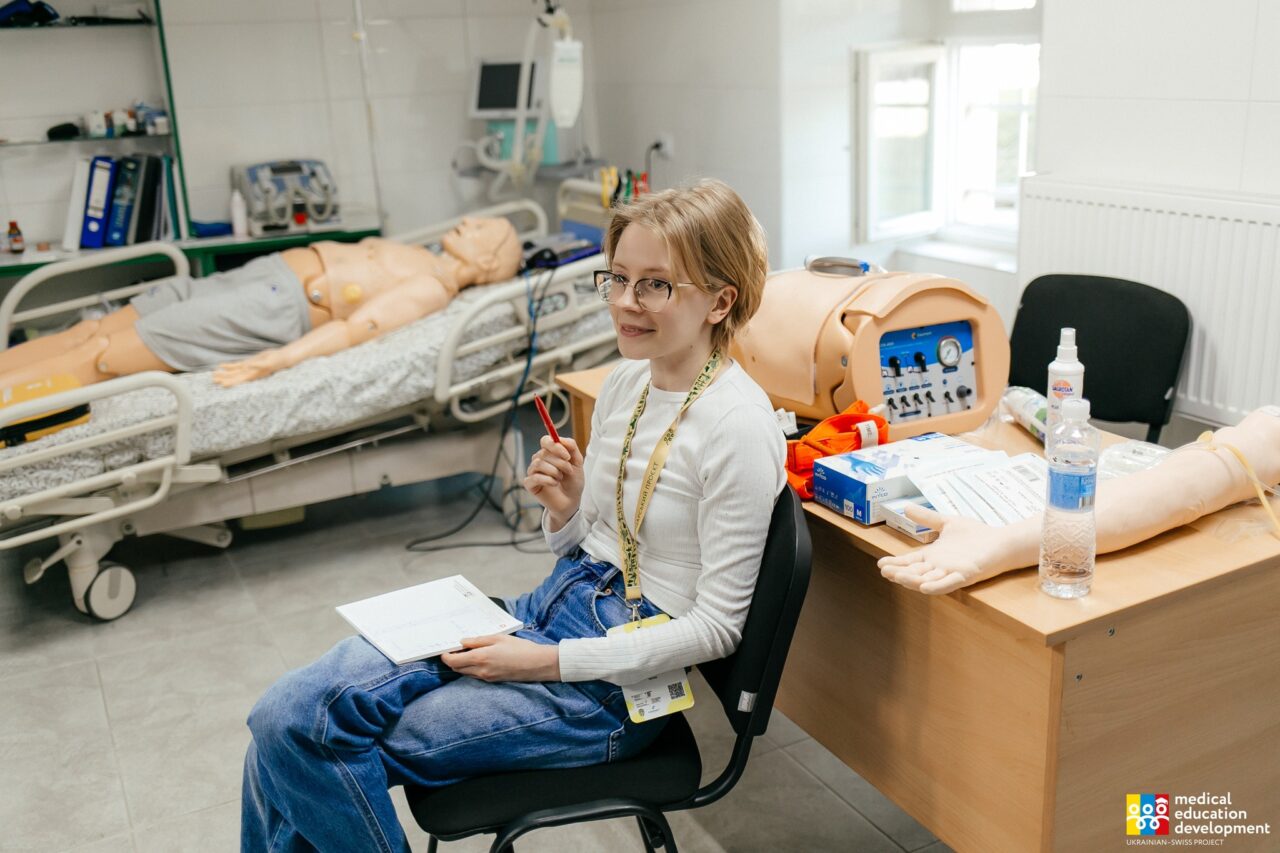
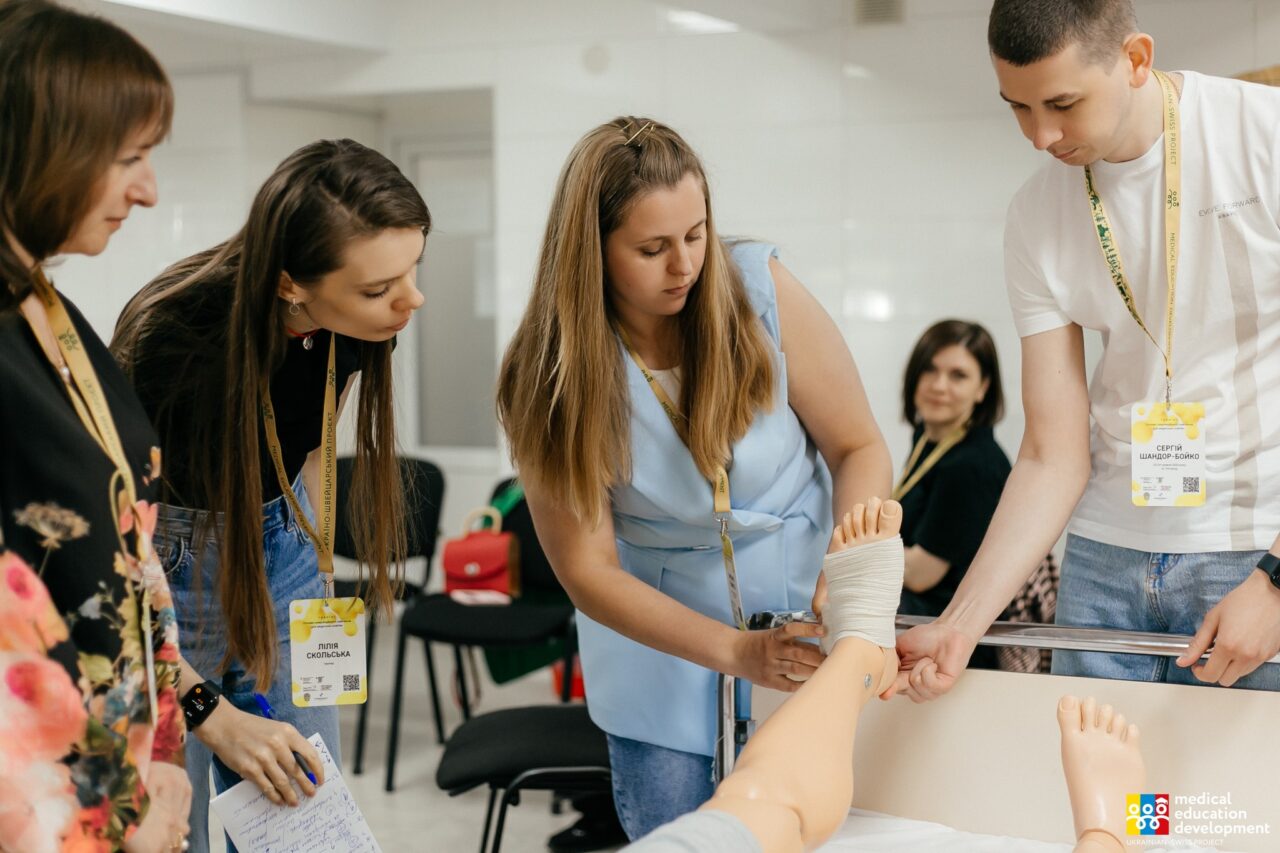
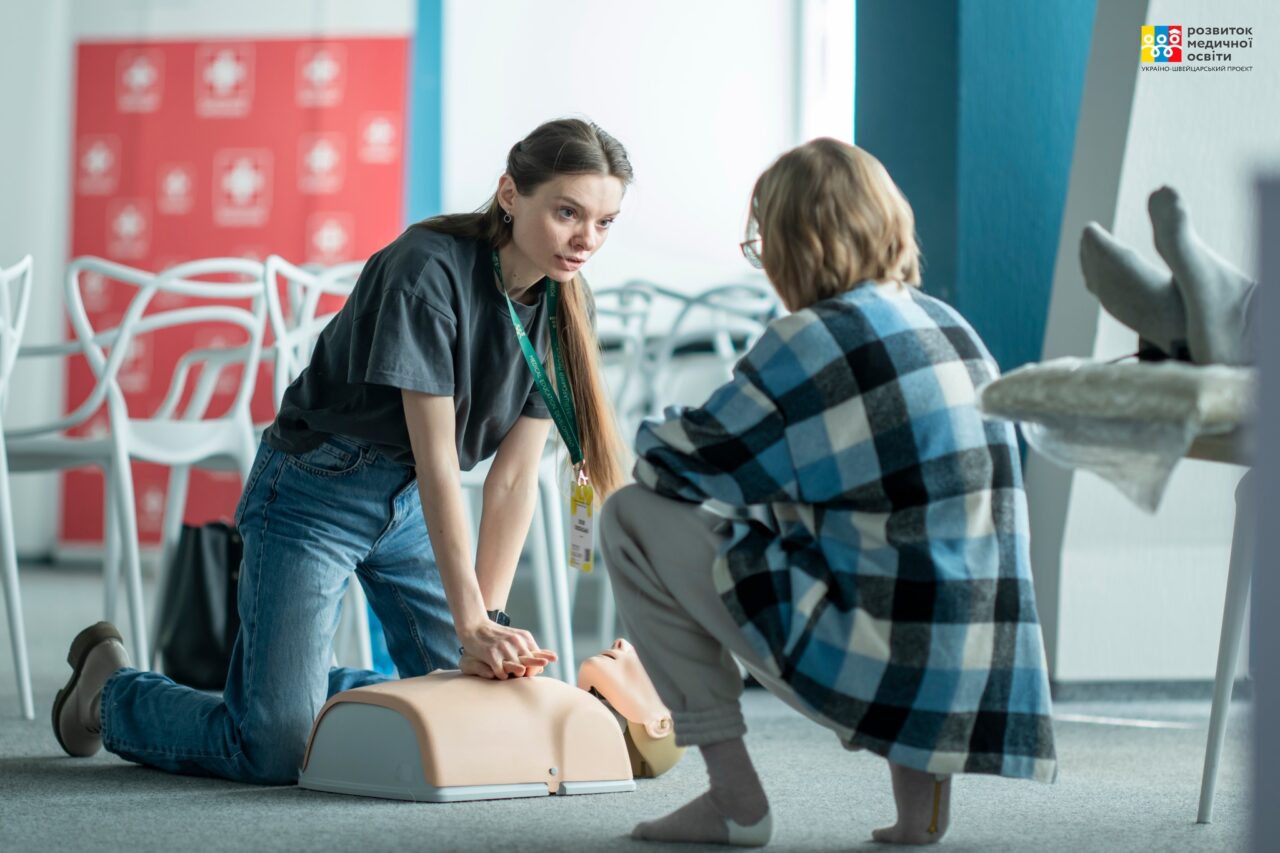
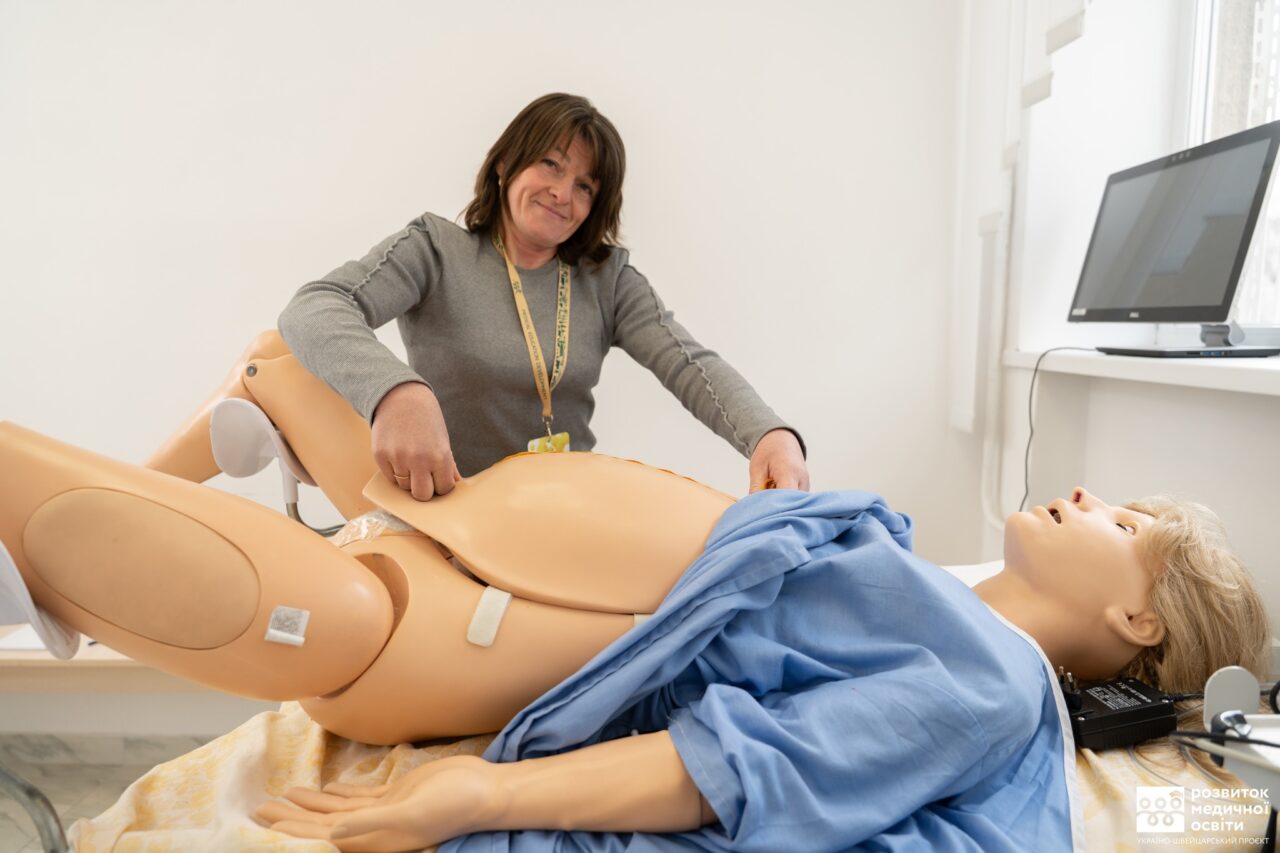
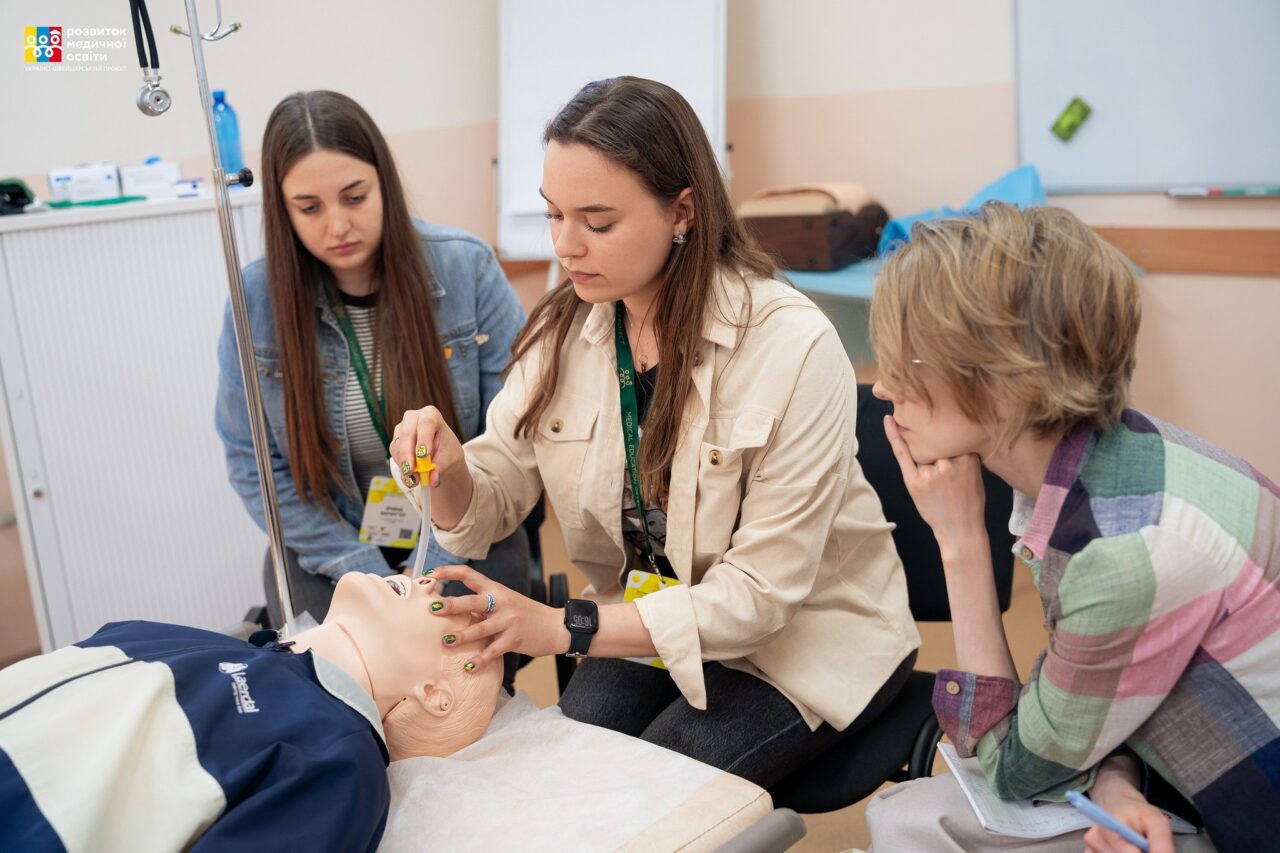
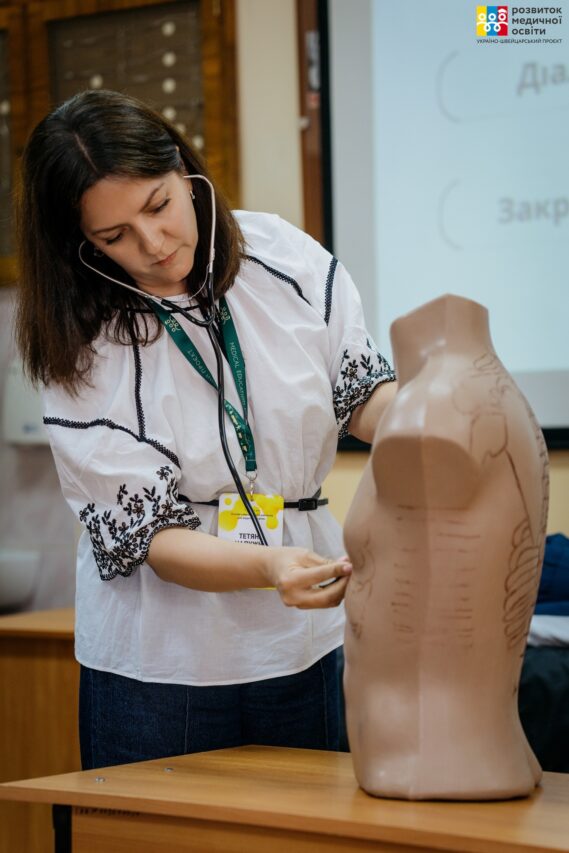
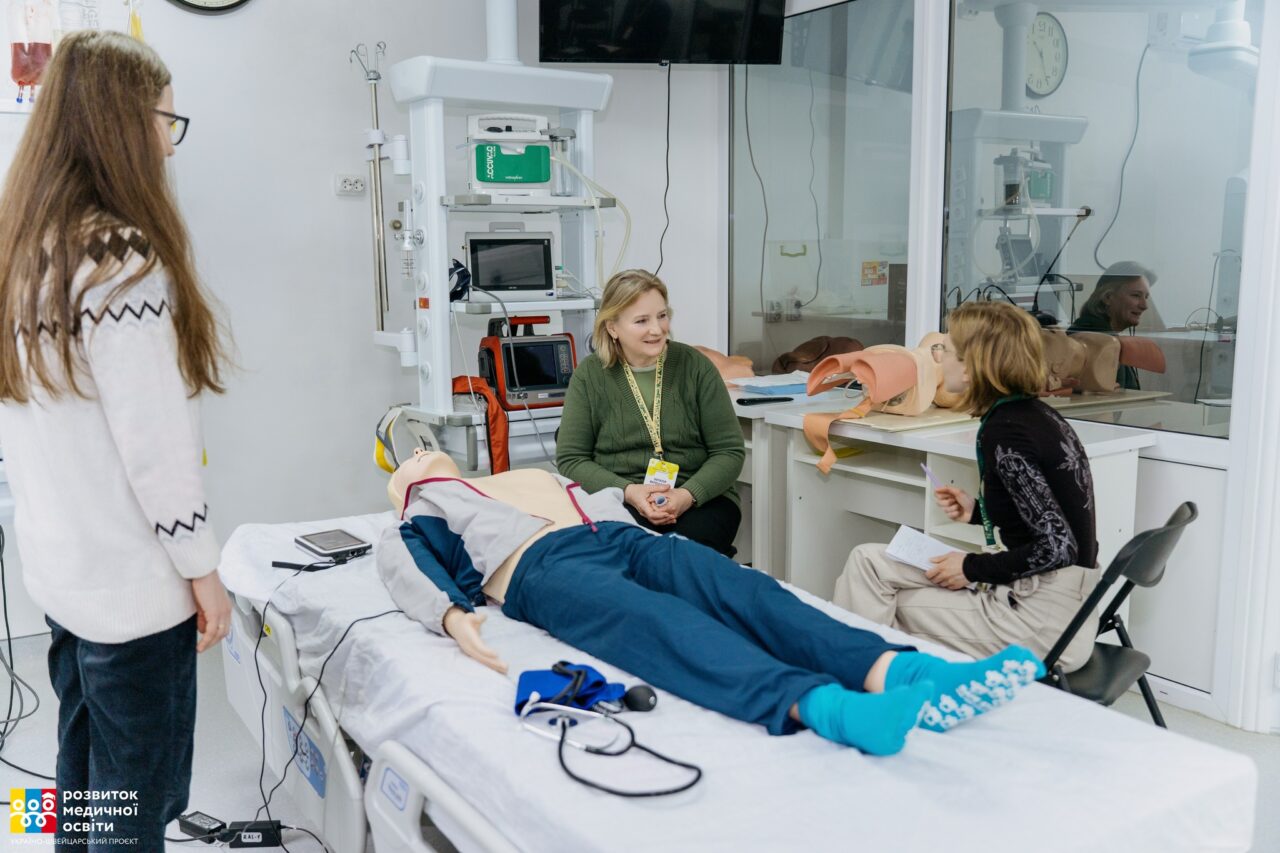
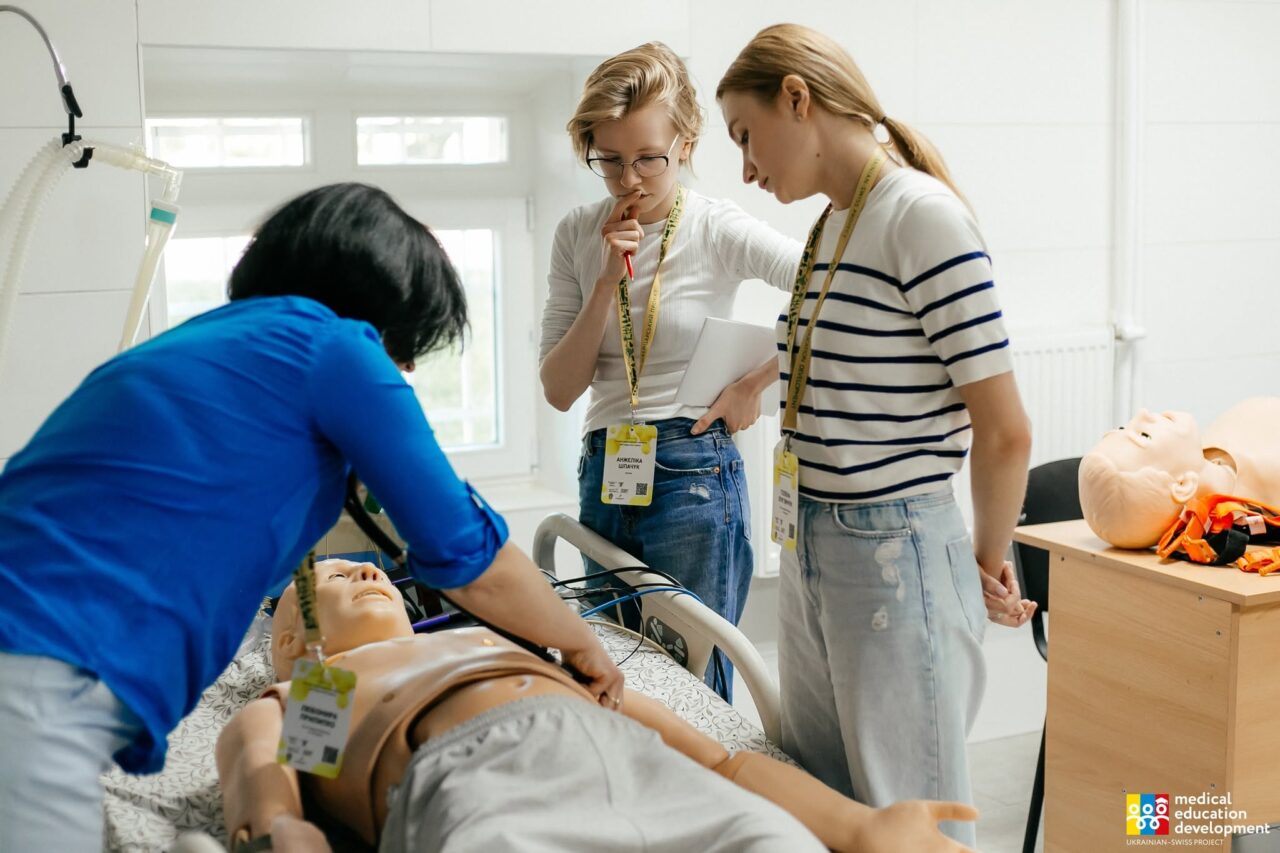
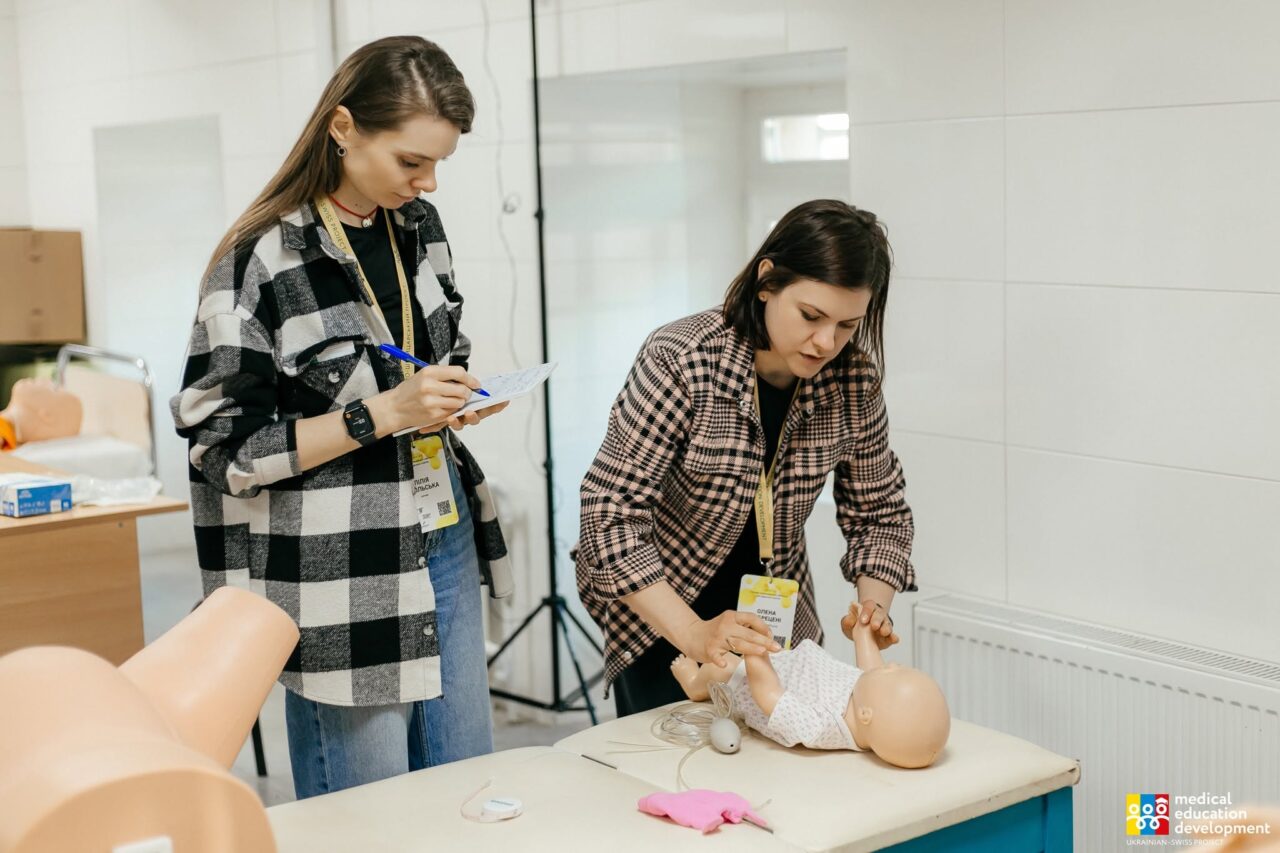
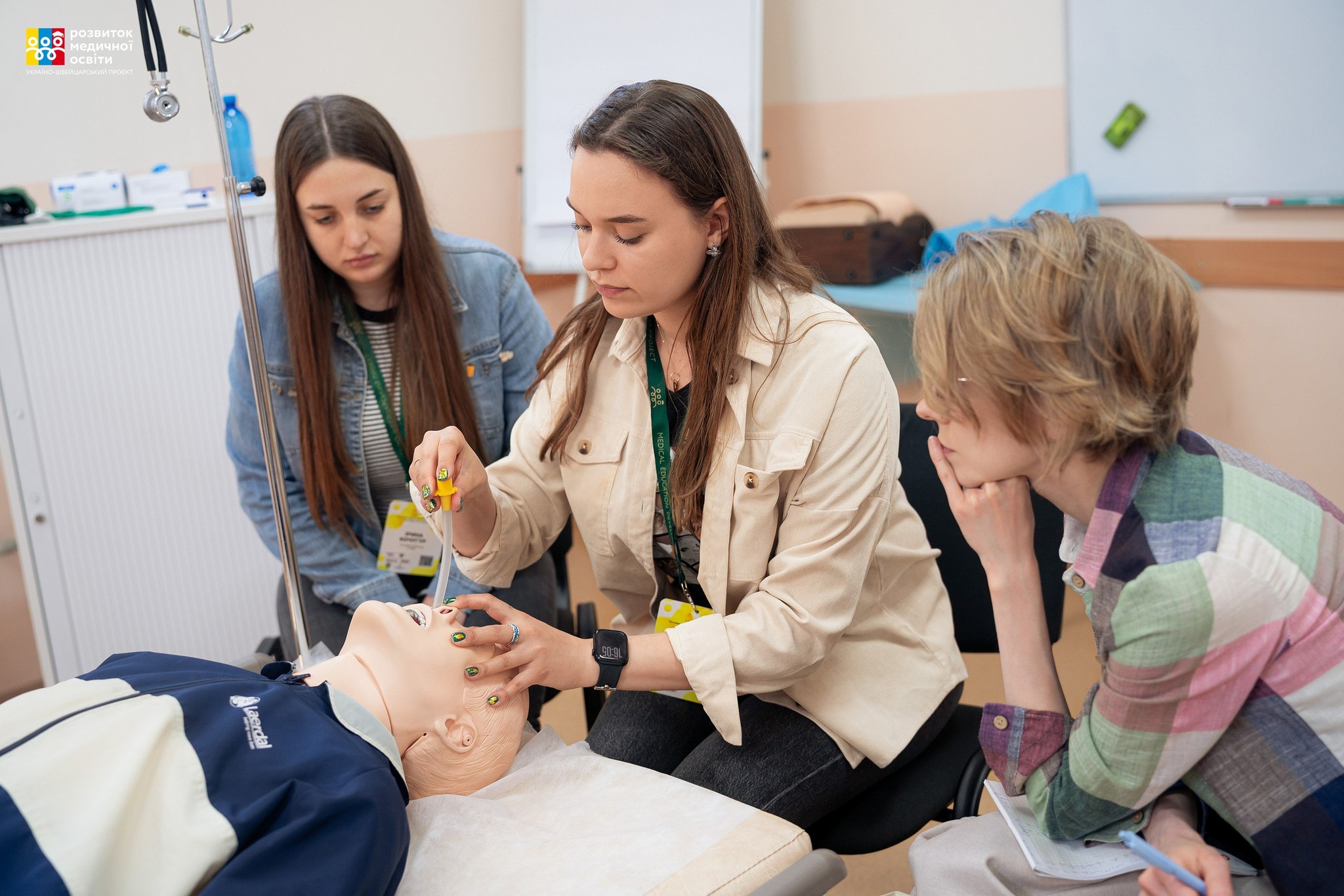
The main goal was to form teams of clinical educators who master the principles of simulation-based learning and are capable of independently designing and conducting classes in the simulation centre. Training mostly took place directly within the HEIs’ simulation centres using available equipment. Due to security restrictions, training for the teams from Zaporizhzhia State Medical and Pharmaceutical University, Kharkiv National Medical University, and Sumy State University was conducted in Kyiv.
The primary task for the trainers was to show participants that simulation changes the very logic of training: it is a shift from transmitting knowledge to changing behavior through planned practical experience, meaning movement through Miller’s Pyramid from the «knows how» level to the «shows how» level.
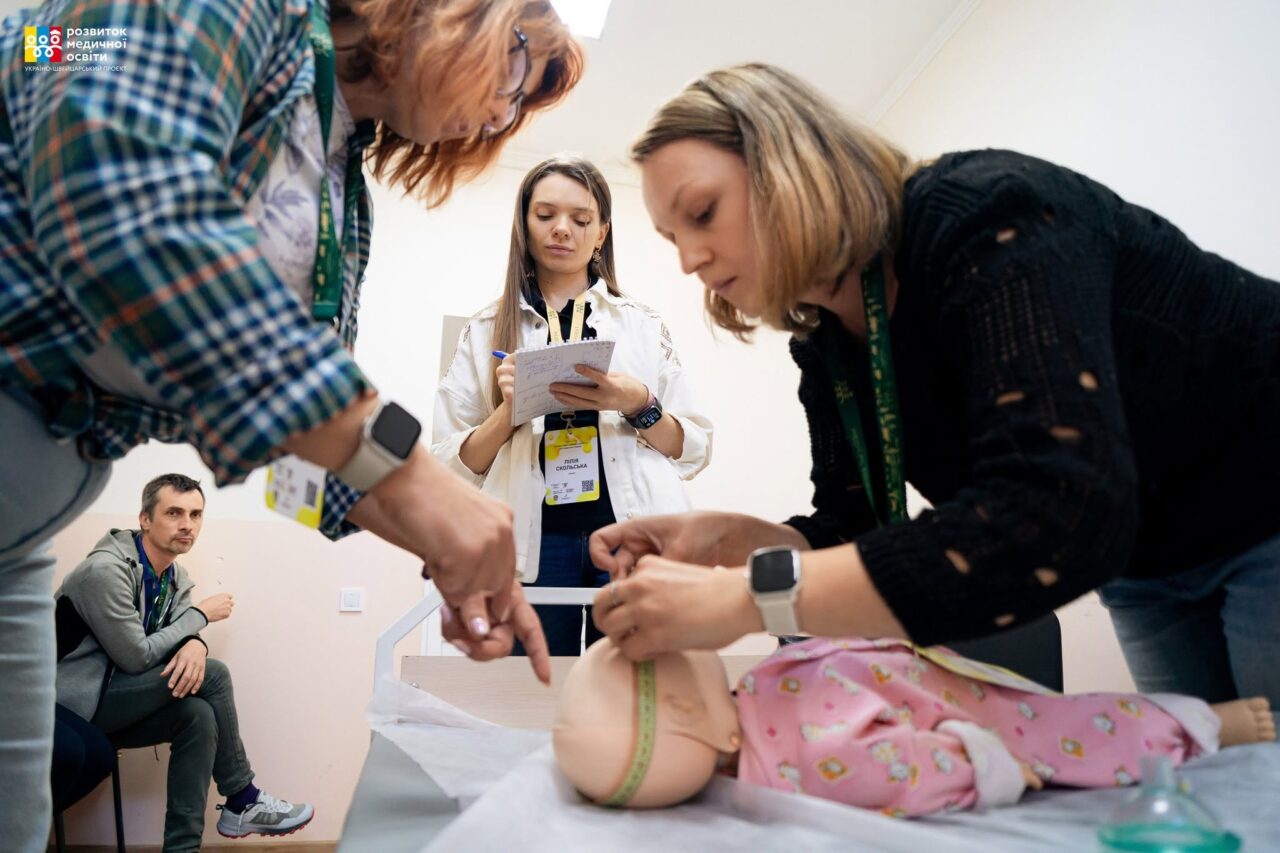
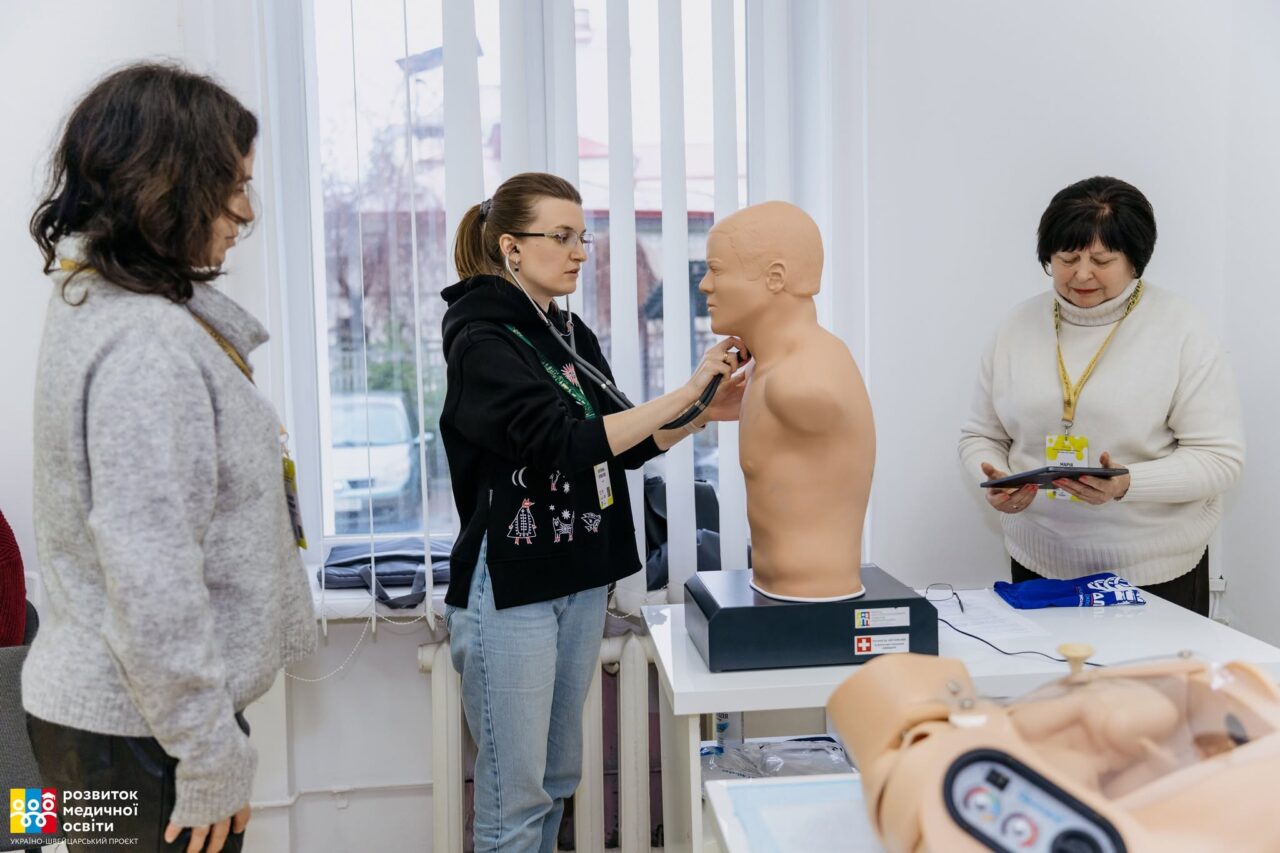
Each two-day training included practical work:
-
mastering the four-stage approach to skill development;
-
practicing practical skill stations in the roles of teachers and students;
-
developing their own scenarios;
-
mastering the skills of conducting debriefing without judgmental evaluations.
The series of trainings covered 119 educators from ten pilot institutions: Zhytomyr Medical Institute, Kharkiv National Medical University, Danylo Halytsky Lviv National Medical University, Sumy State University, Horbachevsky Ternopil National Medical University, Ivano-Frankivsk National Medical University, Bukovinian State Medical University, Bogomolets National Medical University, Zaporizhzhia State Medical and Pharmaceutical University, and the Faculty of Medicine at Uzhhorod National University.
The program was prepared and conducted by experienced practicing physicians and certified instructors:
-
Liliia Skolska — anaesthesiologist, Head of the Education and Training Centre at the Dobrobut Academy private higher education institution, certified instructor and course director for the All-Ukrainian Resuscitation Council and the European Resuscitation Council.
-
Anzhelika Shpachuk — anaesthesiologist, assistant at the Department of Anaesthesiology and Surgery at the Dobrobut Academy private higher education institution, certified instructor and course director for the All-Ukrainian Resuscitation Council and the European Resuscitation Council.
-
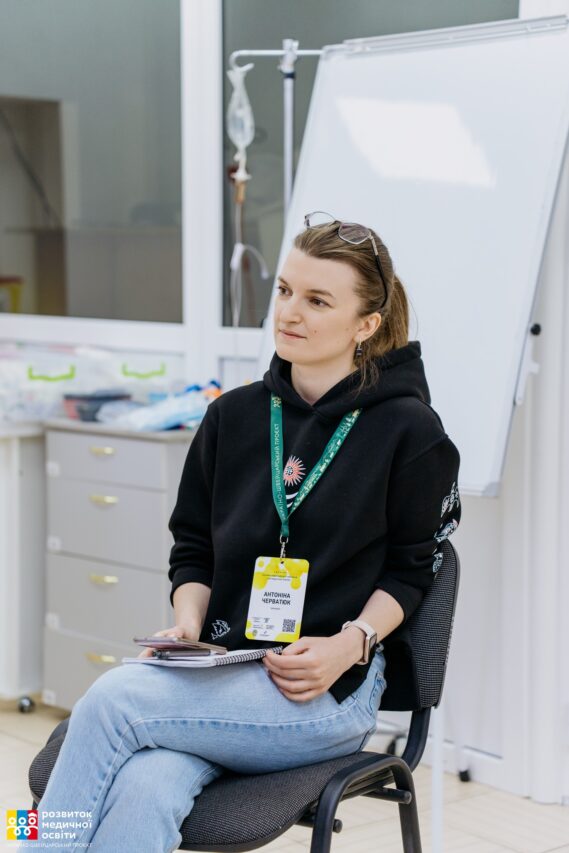
Antonina Chervatiuk — Head of the Simulation Training Centre at Horbachevsky Ternopil National Medical University, assistant at the Department of Emergency and Simulation Medicine, certified course instructor for the All-Ukrainian Resuscitation Council and the European Resuscitation Council.
Participants noted the high value of practical work, the opportunity to experience being in the role of students, and shared plans to integrate new formats and structure session scenarios in their own institutions:
«I plan to integrate simulation scenarios into the training of nurses (specifically regarding basic nursing manipulations and patient communication), and systematically apply feedback and debriefing after practical classes. Special attention will be paid to creating a safe learning environment and developing clinical thinking in students».
«The most useful parts for me were the practical blocks of the training: practicing practical skill stations and simulation scenarios, as they provided an opportunity to apply theory in practice. Especially valuable were the stages of providing feedback and debriefing, which helped to better understand how to build a safe learning environment and effectively discuss results. Preparing our own scenarios was also important, as it allowed us to systematize the approach to planning simulation classes and assessing learning outcomes».
«All presented materials were structured extremely clearly. The information was presented in an accessible language, without unnecessary filler».
«We have already applied the acquired knowledge in developing a learning simulation scenario, conducting a simulation, and debriefing during a Medical Theatre session for 5th-year students».
The gained experience and readiness to change approaches to learning demonstrate that investments in teaching teams yield rapid results. The project will continue its systematic work in this direction, as capacity building of educators serves as the foundation for the qualitative transformation of future medical training in Ukraine.